Best Insoles for Standing All Day on Hard Floors
Structured support versus cushioned comfort, and how to extend the life of the work shoes you already own.
Disclosure: links in this post may be affiliate links. MyShiftX may earn a small commission on qualifying purchases, at no additional cost to you.
A shoe’s factory insole is built for a fitting-room shuffle, not a ten-hour shift on concrete or tile. It looks fine, it feels fine for the first hour, and then somewhere around hour six the cushioning has compressed flat and your feet are essentially standing on bare midsole. Replacing that thin factory foam with a real insole is one of the few upgrades that costs less than dinner out and noticeably changes how your feet feel on the drive home.
The right insoles for shift work stay supportive late in the day, fit the shoes you actually wear, and don’t create new pressure points or heat issues.
What Matters for All-Day Standing
- Cushioning that doesn’t compress flat after a few hours.
- Arch support matched to your foot type (flat, neutral, high).
- Heel and forefoot shock absorption for hard surfaces.
- Ability to trim or choose the correct size so they sit properly.
- Breathability so feet don’t overheat inside already warm shoes.
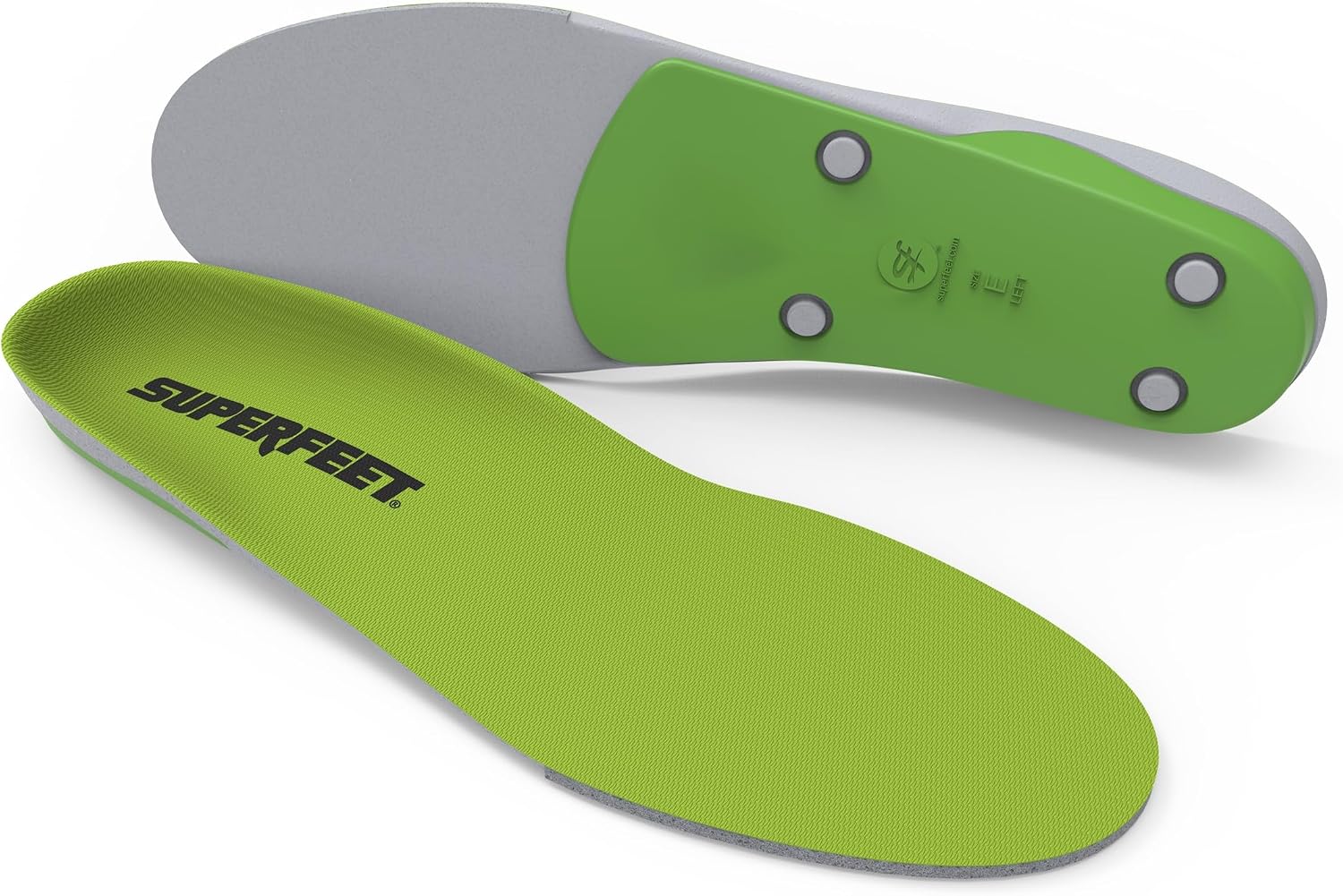
Superfeet High Arch or Green
Pros
- Strong arch support
- Durable structure
- Widely recommended for standing work
Cons
- Firm feel takes adjustment for some
- Higher price than basic foam
Best for: People who need real arch support and prefer a structured feel over soft cushioning.
Check Current Price on AmazonSuperfeet is one of the most recommended brands for people who stand or walk all day. The Green and high-arch versions provide firm, structured support that many users notice immediately in their arches and overall posture. They’re designed to sit in a wide range of shoes and are popular among nurses, retail workers, and anyone on hard floors.
The firmness is intentional — softer foam can feel great at first but collapse under full body weight over long hours. Superfeet tend to hold their shape longer.
PowerStep Pinnacle
Pros
- Good balance of support and cushion
- Effective for standing fatigue
- Solid durability
Cons
- May feel bulky in tighter shoes
- Fit needs to be right
Best for: General all-day standing relief when you want both support and some softness.
Check Current Price on AmazonPowerStep Pinnacle insoles combine a supportive arch with more cushioning than the firmest Superfeet options. They’re frequently recommended by podiatrists and people who stand for long shifts. The design aims to stabilize the foot while still providing shock absorption under the heel and forefoot.
Many users with mild to moderate arch issues or general standing fatigue report less end-of-day discomfort after switching. They’re a strong middle-ground choice.
Walkhero or Dr. Scholl's Work Insoles
Pros
- Affordable
- Easy to find
- Immediate cushioning improvement for many users
Cons
- Support level is milder
- May compress faster under heavy daily use
Best for: Budget-friendly first upgrade or temporary relief while testing higher-end options.
Check Current Price on AmazonFor a lower-cost entry point, brands like Walkhero and Dr. Scholl’s work-oriented insoles offer cushioning and basic arch support that many shift workers find helpful. They’re widely available, often trim-to-fit, and designed specifically with hard floors and long hours in mind.
These won’t match the structured support of Superfeet or PowerStep for everyone, but they’re a practical first upgrade if your current shoes have flattened out or never had much support to begin with.
Customizable Trim-to-Fit Options
Pros
- Better custom fit
- Works across different shoe brands
Cons
- Requires careful trimming
- Irreversible if cut too short
Best for: Anyone whose shoes have an unusual last or who has had fit issues with previous insoles.
Check Current Price on AmazonMany quality insoles come with trim lines so you can match them to your exact shoe size and shape. This matters more than it sounds — poorly fitting insoles can slide, bunch, or create pressure points that make the problem worse. Look for models that clearly show how to trim and that leave enough material under the heel and arch after cutting.
Getting the length and width right is often the difference between insoles that help and insoles that get removed after a few days.
Matching Insoles to Your Actual Foot Type
Most of the disappointment with insoles comes from buying the wrong support level for your arch, not from a bad product. A rough, no-cost way to check: wet the bottom of your foot and step once onto a paper bag or dark concrete, then look at the print. If you see almost the entire sole with barely a curve on the inside edge, you likely have a flatter arch and benefit from firmer, more structured support like Superfeet. If you see only the heel, the ball, and a thin outside strip — almost no middle section touching — you likely have a high arch and may prefer more cushioning under the arch rather than rigid structure. Most people land somewhere in between, which is exactly the group a balanced option like PowerStep is built for.
This isn’t a substitute for a podiatrist if you have ongoing pain, but it’s enough to stop buying insoles at random and switching brands every few months without knowing why the last pair didn’t work. If pain persists, is sharp rather than dull, or is concentrated in one specific spot rather than general end-of-shift fatigue, that’s a sign to see a professional rather than keep experimenting with insoles alone.
Practical Tips
- Replace the existing insole in the shoe rather than stacking on top of it when possible — this keeps volume and fit closer to original.
- Give new insoles a few full shifts to break in; some firmness softens slightly with use.
- If one brand doesn’t feel right, try a different support level rather than assuming insoles don’t work for you.
- Pair with good socks (and compression socks if swelling is an issue) for better overall results.
- When the insoles themselves feel flat or your feet start hurting more again, it’s time for a new pair — usually every 6–12 months of heavy use.
Insoles are one of the cheapest ways to improve how your current work shoes perform on hard floors. Structured options like Superfeet or PowerStep give the most noticeable support for many people, while more cushioned or budget options still help if your shoes have lost their original padding. Start with a well-reviewed pair matched to your arch needs, trim carefully if required, and judge them after a full week of real shifts rather than the first hour.
When you first put new insoles in, wear them for a shorter period if possible and pay attention to any new pressure points. Most supportive insoles need a few full shifts before they feel natural. If a particular model creates hotspots or feels unstable, try a different support level or brand rather than abandoning the idea of insoles altogether. The combination of decent shoes plus the right insoles is one of the most cost-effective ways to reduce the cumulative wear of hard floors over months and years of shift work.
Keep a spare pair of insoles or an older set as backup so you are never forced back into completely flattened foam while waiting for a replacement.
See what a shift board actually looks like
A walkthrough of the Wall, the calendar, and how a trade gets settled.
Explore the demo