Top 7 Compression Socks That Actually Survive Long Shifts
Graduated compression options for swollen ankles and heavy legs after 10-12 hours standing on hard floors.
Disclosure: this post includes affiliate links, and MyShiftX may earn a small commission on a purchase at no extra cost to you.
Legs don’t announce that they’re struggling until the damage is already done for the day. You feel fine through the first six hours of a theme park shift, a busy restaurant service, or a merchandise floor peak, and then somewhere around hour eight your ankles are visibly swollen and your calves feel like they’re carrying extra weight. Compression socks won’t fix everything, but the right pair can make a noticeable difference in how your legs feel during and after a long shift.
Graduated compression (tighter at the ankle, gradually less as it moves up the leg) helps support circulation and reduce the pooling of fluid that leads to swelling and fatigue. For shift workers, the practical questions are: Do they stay up? Are they comfortable enough to wear all day under work shoes? Do they hold up after repeated washes? And is the compression level useful without being painful?
Here’s a focused look at options that consistently show up in real feedback from people who stand and walk for a living.
What to Look For
- 15–20 mmHg is the most common “mild to moderate” range for all-day work wear. 20–30 mmHg is firmer and often preferred by people who already deal with more swelling.
- Knee-high is the standard length for shift work.
- Stay-up ability matters more than marketing claims — many cheap pairs slide down by mid-shift.
- Breathability and moisture-wicking help in hot kitchens or outdoor park environments.
- Multi-packs make sense when you need clean pairs every day.
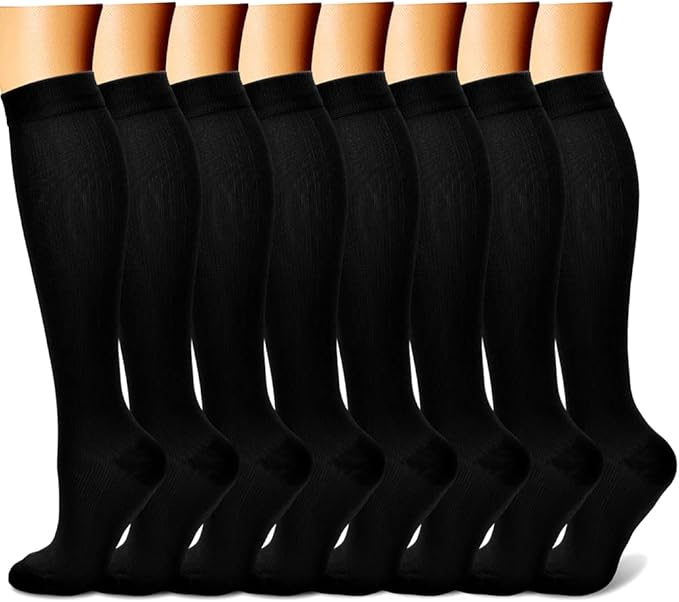
CHARMKING Multi-Packs (15-20 mmHg)
Pros
- Excellent price-per-pair
- Decent all-day comfort for mild compression
- Lots of color options
- Easy to rotate
Cons
- Not the firmest support
- Some pairs can feel thinner than premium brands
Best for: Anyone who wants to try compression without spending a lot, or who needs multiple pairs for daily use.
Check Current Price on AmazonCHARMKING multi-packs (often 3, 6, or 8 pairs) are one of the most popular budget options for a reason. They deliver graduated 15-20 mmHg compression at a price that lets you own several pairs so you’re not washing the same two every night. The fabric is stretchy nylon-spandex, and most people find them comfortable enough for full shifts once sized correctly.
Reviewers who work long hours on their feet frequently mention reduced end-of-day swelling and less heavy-leg feeling. They come in many color combinations, which helps if you need something that doesn’t scream “medical sock” under pants or with uniforms.
Physix Gear Sport (20-30 mmHg)
Pros
- Solid firm compression
- Stays up well
- Good durability
- Widely available sizes
Cons
- Firmer feel takes a little getting used to
- Single pairs cost more than multi-packs
Best for: Workers who want noticeable support and have already tried milder options.
Check Current Price on AmazonPhysix Gear is one of the most frequently recommended mid-range options for nurses, servers, and other people on their feet all day. The 20-30 mmHg graduated compression is firmer than many budget packs, and the socks tend to stay in place better than cheaper alternatives. Moisture-wicking fabric helps in warmer environments.
Testers and long-term users often note that legs feel less swollen and less fatigued after full shifts. Sizing goes up to larger calf options, which is useful for people who find standard compression socks too tight at the top.
Sockwell Circulator (Merino)
Pros
- Excellent temperature and odor control
- Durable
- Stays in place
- Comfortable for sensitive skin
Cons
- Higher price
- Firmness can feel stiff to some
Best for: Outdoor event or park staff, or anyone who prioritizes natural fibers and all-day comfort.
Check Current Price on AmazonSockwell’s Circulator (and similar merino blends) stands out for temperature regulation. Merino wool helps keep feet cooler in heat and warmer in cold without the sweaty feel of pure synthetics. Compression is typically in the moderate-to-firm range, and the construction is known for holding its shape and staying up through long days.
These cost more per pair, but people who wear them for outdoor park shifts or temperature-variable environments often prefer the comfort and odor control. They’re a step up in materials and feel for those willing to invest in fewer, higher-quality pairs.
Bombas Compression
Pros
- Very comfortable for all-day wear
- Thoughtful design details
- Good for milder needs
Cons
- Milder compression may not be enough for heavy swelling
- Higher price than basic multi-packs
Best for: People new to compression or those who want a sock that feels good from the first hour to the last.
Check Current Price on AmazonBombas Everyday Compression socks (usually 15-20 mmHg) emphasize comfort details: seamless toes, cushioned soles, and a honeycomb arch support design. The compression is milder than medical-grade firm options, which makes them easier for first-time users or people who want support without a tight squeeze.
Many reviewers who walk a lot during their shifts appreciate the comfort and the fact that the socks feel more like regular premium socks with added support. They’re a strong choice if pure plush feel matters as much as compression strength.
Wellow or Wide-Calf Options
Pros
- Proper fit for wider calves
- Reduces the dig-in or slide-down problem
Cons
- Fewer color choices in some lines
- Can cost more
Best for: Anyone who has struggled with regular compression socks being too tight at the top.
Check Current Price on AmazonStandard compression socks often fail people with wider calves — they either dig in at the top or slide down. Brands and styles that specifically offer wide-calf or extended sizing (including some Wellow and similar lines) solve that problem. Look for models that list calf circumference ranges and offer true wide options.
For shift workers with larger lower legs, proper fit is the difference between socks that help and socks that create new pressure points. These options usually stay in the useful 15-20 or 20-30 mmHg range while accommodating real body shapes.
Comrad Compression Socks
Pros
- Soft, breathable fabric
- Wide range of colors and patterns
- Consistent graduated compression
Cons
- Pricier per pair than multi-packs
- Sizing runs specific — check the chart
Best for: Workers who want compression that doesn't look 'medical' and don't mind paying more for one trusted brand.
Check Current Price on AmazonComrad built its reputation on making compression wear that looks and feels like a normal premium sock rather than something clinical. The fabric is soft and breathable, the graduated compression (available in both 15-20 and 20-30 mmHg) is consistent pair to pair, and the color and pattern range is wider than most medical-style brands offer.
They cost more than a multi-pack, but for people who want a sock they’d happily wear outside of work too, Comrad is a frequent recommendation. Sizing is specific to the brand, so check the chart rather than guessing from your usual shoe size.
Copper-Infused or Performance Multi-Pack Alternatives
Pros
- Multi-pack value
- Odor-resistant copper infusion
- Athletic-style fit works well under closed shoes
Cons
- Copper odor-control claims are more marketing than proven
- Compression consistency varies by manufacturer
Best for: Budget shoppers who want an athletic-style compression sock with added odor control, bought in bulk.
Check Current Price on AmazonCopper-infused compression socks lean on an athletic, performance-sock look rather than the medical style of most compression brands, and they’re usually sold in multi-packs at a lower per-pair price. The copper thread is marketed for antimicrobial and odor-control properties — the clinical evidence for that is thin, but the socks themselves still deliver ordinary graduated compression underneath the marketing.
Quality varies more by manufacturer than with established brands, so it’s worth checking recent reviews for the specific multi-pack rather than assuming all copper-infused options perform the same. For shift workers who go through socks fast and want a bulk option that still fits comfortably under sneakers, this category fills that gap.
When to Check With a Doctor First
Compression socks are safe and helpful for most healthy people on their feet all day, but they’re not universally risk-free. Anyone with diagnosed peripheral artery disease, certain heart conditions, or nerve damage that affects sensation in the legs should get a doctor’s guidance before wearing firm graduated compression, since restricting blood flow to an already-compromised leg can make things worse rather than better. If you notice numbness, increased pain, or skin discoloration after putting a pair on, that’s a signal to take them off, not push through.
None of this is a reason for most shift workers to avoid compression socks — it’s a reason to start at the milder 15–20 mmHg range rather than jumping straight to 20–30 mmHg, and to mention it to a doctor if you have any existing circulation or heart condition rather than assuming a sock sold without a prescription is automatically fine for every leg.
Quick Buying Notes
- Measure your calf if possible and check the brand’s size chart — don’t guess.
- Start with 15-20 mmHg if you’re new to compression; move to 20-30 mmHg if you need more support.
- Wash according to the label (usually cool water, air dry) to keep elasticity longer.
- Many people rotate pairs so the fabric recovers between wears.
- Pair them with supportive shoes for the best combined effect on swelling and fatigue.
Compression socks are one of the simpler upgrades for long-shift recovery. The best pair is the one that stays comfortable, stays up, and leaves your legs feeling better at the end of the day than they would without them. Start with a value multi-pack or a well-reviewed firm option, then refine based on how your legs actually feel after a full week of shifts.
See what a shift board actually looks like
A walkthrough of the Wall, the calendar, and how a trade gets settled.
Explore the demo