Best Blue-Light Blocking Glasses for the Drive Home After Nights
Amber lenses, budget filters, and clip-on options for helping the body wind down after a late close or overnight shift.
Affiliate disclosure: some links below are affiliate links, and MyShiftX may earn a small commission on a purchase at no extra cost to you.
There is a specific kind of tired that comes from finishing a close, a night audit, or an overnight event and then driving home under streetlights and headlights, wide awake in a body that is supposed to be shutting down. Blue-toned light — from screens, from LED headlights, from the fluorescent tubes in a break room — tells your brain it is still daytime, at exactly the moment you need it to believe otherwise.
Blue-light glasses are not a cure for that. Nothing that costs $20 fixes a schedule that fights your biology. What they can do is take one signal out of the equation during the hour or two after your shift ends, which is often the difference between falling asleep in twenty minutes and lying there for an hour with your mind still racing.
What Matters for Post-Shift Use
- Effective blue-light filtering in the wavelengths that most affect melatonin (roughly 400–500 nm range).
- Lenses clear enough for safe night driving — avoid extreme orange/red tints if you’ll be behind the wheel.
- Comfortable fit for extended wear (commute + winding-down time).
- Durable frames that survive being tossed in a bag or left in a car.
- Options that look acceptable in public if you’ll wear them while grabbing food or commuting.
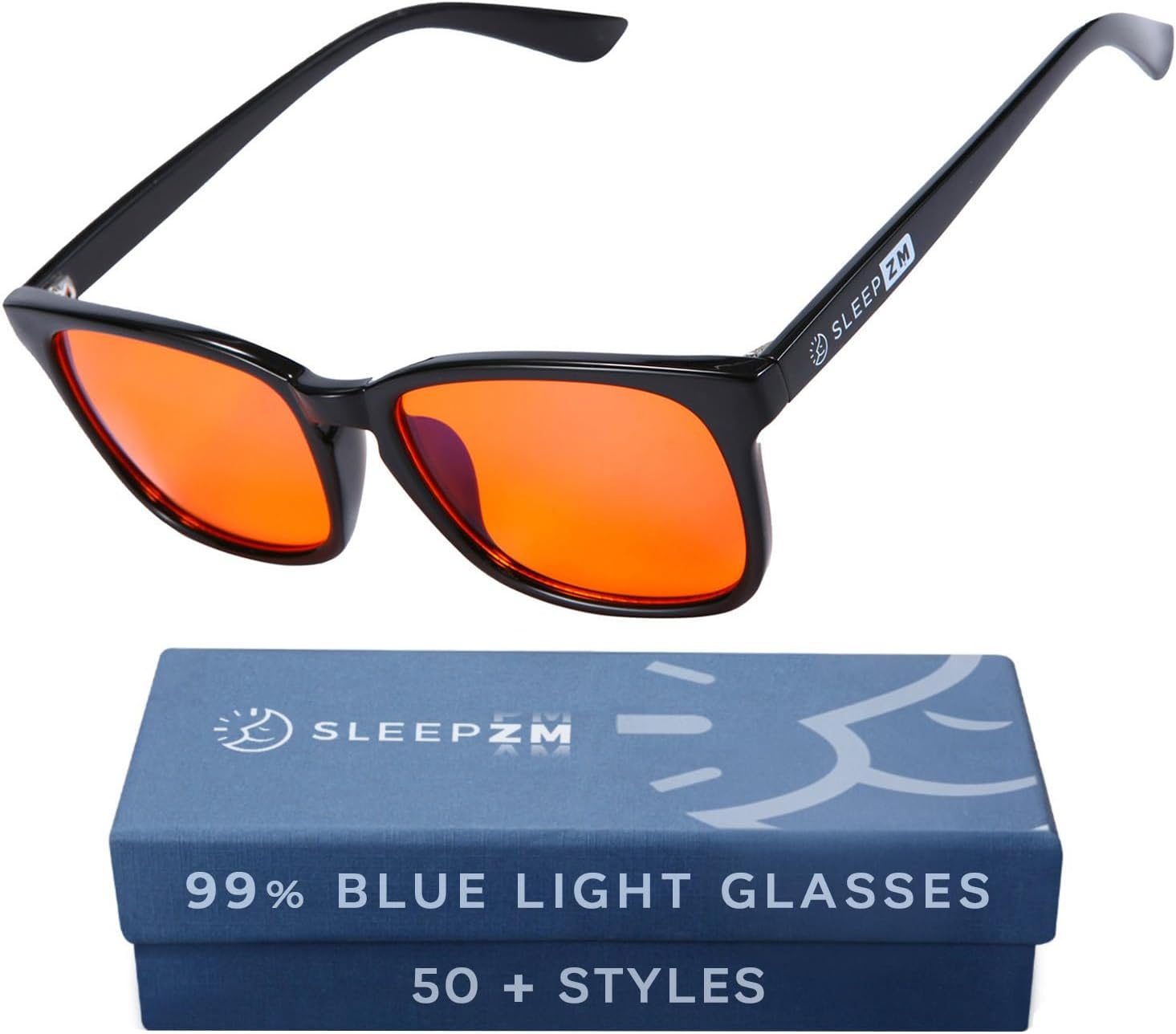
Swanwick or Similar Amber Glasses
Pros
- Stronger blue-light filtering for evening use
- Purpose-built for sleep support
- Multiple frame styles
Cons
- Amber tint changes color perception
- Not ideal for tasks that require perfect color accuracy
Best for: Post-shift wind-down and evening screen use when stronger filtering is the priority.
Check Current Price on AmazonSwanwick and comparable amber-lens glasses are designed specifically for evening and night use. They filter a higher percentage of blue light than many clear “computer” glasses, which makes them more useful when the goal is helping the body wind down after a late shift. The amber tint is noticeable but still usable for many people during evening activities and lower-light driving.
These are a common recommendation for shift workers who want stronger filtering than everyday clear blue-light glasses provide. Fit and comfort vary by model, so check sizing and return policies.
Uvex Skyper (Budget Research-Backed Option)
Pros
- Inexpensive
- Strong filtering
- Wraparound coverage
- Widely available
Cons
- Industrial look
- Orange tint is obvious
- May not feel as refined as premium frames
Best for: Trying stronger blue-light filtering on a budget or for home use after shifts.
Check Current Price on AmazonThe Uvex Skyper is a frequently mentioned budget option that has appeared in research and practical recommendations for blue-light filtering. The orange lenses provide substantial filtering at a low price, and the wraparound style helps block light from the sides. They’re functional rather than stylish, which is fine for many people who mainly wear them at home or in the car after a shift.
For shift workers testing whether blue-light glasses make a difference, this is a low-cost way to try a more aggressive filter without spending much before deciding it’s worth a nicer pair.
Stylish Everyday Blue-Light Glasses
Pros
- More natural appearance
- Comfortable for longer wear
- Suitable for mixed day/evening use
Cons
- Lower filtering percentage than dedicated amber lenses
Best for: People who want subtle protection they can wear more places without drawing attention.
Check Current Price on AmazonIf you want something you can wear more casually — during the end of a shift, on the commute, or while running errands — clear or lightly tinted blue-light glasses with modern frames are more practical. These usually filter less total blue light than dedicated amber evening glasses, but they still reduce some exposure from screens and artificial lighting while looking like regular eyewear.
Many brands offer both prescription and non-prescription versions. They’re a good middle ground if the strong amber look of pure evening glasses feels too much for public use.
Clip-On Options
Pros
- Works with existing glasses
- Lower cost than a full second pair
- Removable
Cons
- Can feel less secure or add bulk
- Optical quality varies
Best for: Prescription glasses wearers who want a simple add-on solution.
Check Current Price on AmazonIf you already wear prescription glasses, clip-on blue-light filters or amber overlays can add protection without requiring a second full pair. Quality varies — look for ones that attach securely and don’t create major distortion or pressure points.
These are a practical solution for prescription wearers who don’t want to invest in a second pair of custom lenses right away. They work best when the clip stays firmly in place during the commute and evening routine.
Does the Science Actually Back This Up?
Worth saying plainly: the research on blue-light glasses and sleep is genuinely mixed. Some studies find a measurable melatonin benefit from filtering evening blue light; others find the effect is small compared to simply dimming screens and lights in general, or find no significant difference at all once other habits are controlled for. Blue-light glasses are not a substitute for a dark room, a cool temperature, and a consistent wind-down routine — they’re a small addition on top of those, not a replacement for them.
Where the evidence is clearer is the practical, non-biological benefit: for people driving home after a night shift, a warmer, less harsh field of view from oncoming headlights is genuinely less fatiguing on the eyes, independent of whatever it does or doesn’t do to melatonin. That alone is a reasonable justification for a $15–30 pair, even for someone skeptical of the sleep-science claims on the packaging.
It also helps to separate two different jobs these glasses are sometimes asked to do. “Help me stop feeling wired after a night shift” is a sleep-onset question, and the evidence there is genuinely mixed. “Make the drive home less harsh on tired eyes” is a comfort question, and that one has a much more obvious yes. Buying a pair to solve the second problem and treating any sleep benefit as a bonus, rather than the other way around, sets a more realistic bar for what a $20 pair of glasses can actually deliver.
Practical Tips for Shift Workers
- Put the glasses on in the last hour or two of your shift or as soon as you leave work if the goal is helping the body start winding down.
- For driving, choose a tint that still allows clear vision of road signs, signals, and other vehicles. Extreme red or deep orange may not be ideal behind the wheel.
- Combine with other good sleep practices: dark room (blackout curtains + sleep mask), cool temperature, and consistent wind-down routine.
- Clean the lenses regularly — smudges are more noticeable with tinted lenses.
- If you try a pair and don’t notice any difference after a couple of weeks of consistent use, they may simply not be a high-leverage tool for you. Individual responses vary.
Blue-light blocking glasses are a low-effort experiment for many night and late-shift workers. The strongest filtering options (amber lenses) are most useful in the evening wind-down window, while clearer everyday styles are better if you want something wearable in more situations. Start with a well-reviewed option that matches how and where you’ll actually wear them, give them a fair two-week trial as part of your post-shift routine, and drop them if they genuinely make no difference — not every shift-work fix works for every shift worker.
See what a shift board actually looks like
A walkthrough of the Wall, the calendar, and how a trade gets settled.
Explore the demo