Best Cooling Towels & Portable Fans for Outdoor Park & Event Staff
Evaporative towels, clip-on fans, and neck fans for managing heat on outdoor shifts without air conditioning.
Heads up: this post includes affiliate links. MyShiftX may earn a small commission if you buy through one, at no cost to you.
Standing on asphalt in direct sun for eight hours does something that standing in an air-conditioned building never will. Heat load builds slowly and quietly — you don’t notice the first hour, you feel a little sluggish by the third, and by the sixth you’re making small decision-quality mistakes without realizing it. Outdoor event and park staff deal with this every peak-season shift, and the fix isn’t heroics. It’s a handful of cheap tools used consistently before you feel bad, not after.
This guide covers the gear that actually earns a spot in a bag or locker for hot outdoor shifts — not the novelty items, the ones that get reached for every single day.
What Matters in Hot Outdoor Conditions
- Rapid cooling effect when activated (usually with water).
- Reasonable duration before needing to be re-wetted.
- Lightweight and packable so you’ll actually carry it.
- Durable enough for daily outdoor use and repeated wetting.
- For fans: battery life that lasts a meaningful portion of a shift and secure attachment options.
Instant Cooling Towels (Multi-Packs)
Pros
- Inexpensive
- Lightweight
- Noticeable cooling when activated
- Easy to carry multiple
Cons
- Effect fades as they dry
- Need access to water to re-activate
- Quality varies by brand
Best for: Almost any outdoor role as a first, low-cost heat management tool.
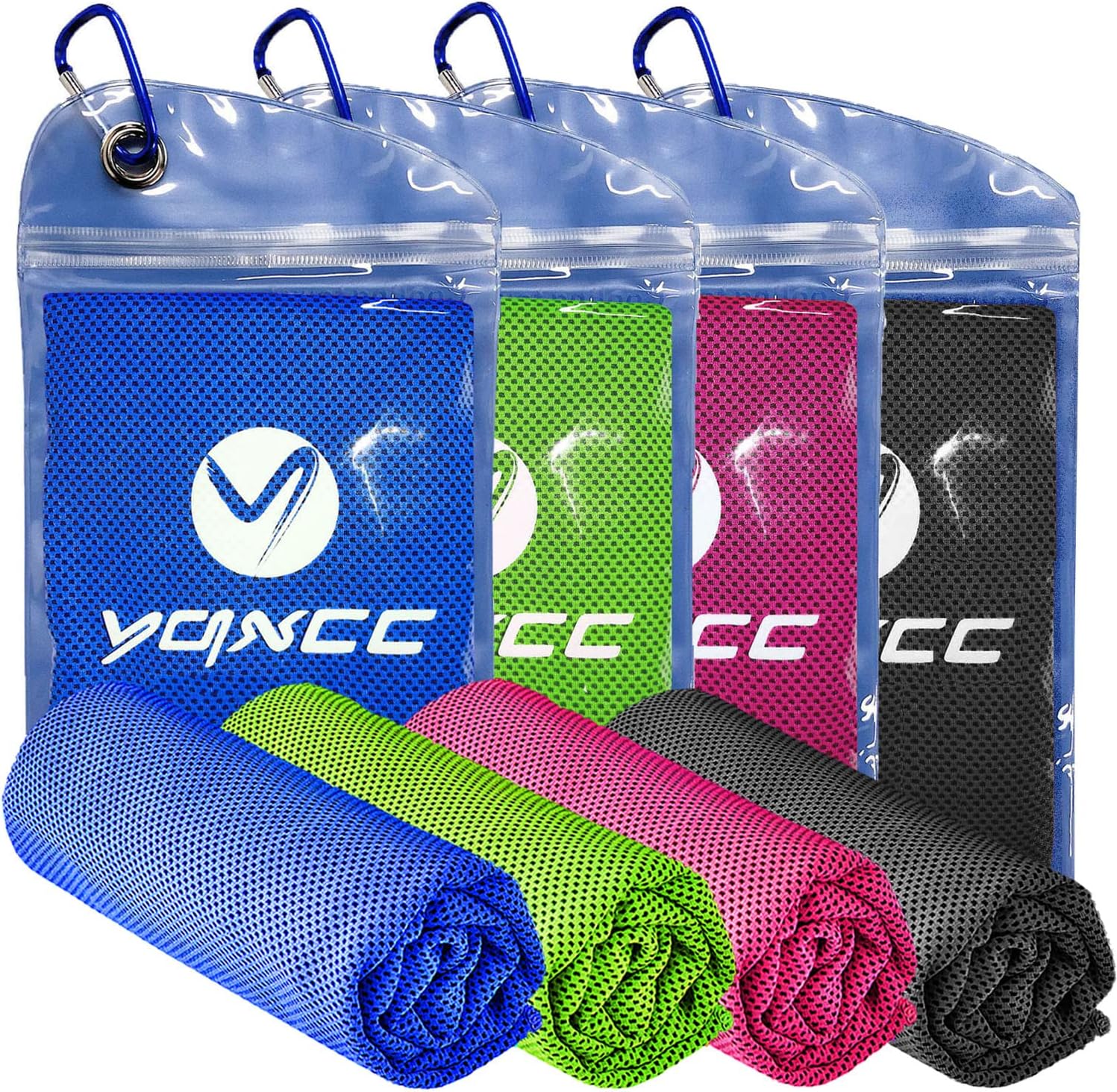
Check Current Price on AmazonInstant cooling towels work by evaporative cooling. You wet them, wring them out, and snap or shake them to activate the cooling effect. Many are made from PVA or similar materials that hold water and feel significantly cooler than ambient temperature against the skin. They’re cheap enough to buy in multi-packs so you can rotate or keep spares in different bags, a locker, and the car.
For park and event staff, a cooling towel around the neck or over the head during breaks (or under a hat) can take the edge off high heat. Re-wetting at a water fountain or with a water bottle keeps them working through the day.
Small Clip-On or Handheld Fans
Pros
- Active airflow
- Useful in humid conditions
- Many clip-on options keep hands free
Cons
- Battery management required
- Can be noisy
- Bulkier than a towel
Best for: Stationary or low-movement outdoor posts, or as a break-time tool.
Check Current Price on AmazonWhen humidity is high or evaporative cooling is less effective, a small fan that moves air across your skin helps. Clip-on models that attach to a shirt, bag, or hat free your hands, while compact handheld fans are useful during breaks. Look for ones with decent battery life and multiple speeds.
These are especially helpful in still air or when you’re stationary for long periods. Pairing a fan with a cooling towel often works better than either tool alone.
Neck Fans
Pros
- Hands-free
- Continuous airflow
- Increasingly common and refined designs
Cons
- Battery life limits usefulness on very long shifts
- Some feel bulky or unbalanced
Best for: Roles where you need ongoing cooling without holding a device.
Check Current Price on AmazonNeck fans sit around the neck and blow air upward toward the face and neck. They’re popular for outdoor work because they provide continuous airflow without occupying your hands. Battery life varies widely — look for models that claim several hours on a single charge and have a comfortable weight distribution.
These work best when the ambient temperature isn’t extreme and humidity isn’t so high that the air itself feels oppressive. They’re a step up in convenience from handheld fans for people who need ongoing airflow.
Optional Cooling Vests or Bandana Styles
Pros
- Broader or longer-lasting cooling in some designs
Cons
- Higher cost
- Often require pre-cooling
- Can be bulkier under uniforms
Best for: Extreme heat roles or as an upgrade when simpler tools fall short.
Check Current Price on AmazonFor higher-heat environments or longer continuous exposure, some workers use cooling bandanas, neck wraps with phase-change materials, or lightweight cooling vests. These provide broader coverage than a single towel. Phase-change or gel-based products need to be pre-cooled (often in a freezer or cooler) and have a defined active time.
These are more specialized and usually more expensive. They’re worth considering if basic towels and fans aren’t enough for the conditions you regularly face.
Recognizing Heat Stress Before It Becomes a Problem
Cooling gear is a comfort tool right up until it isn’t enough, and the line between “uncomfortably hot” and an actual heat-related illness is easy to miss when you’re busy with guests or a line. The early signs worth knowing: heavy sweating that suddenly stops, cool or clammy skin despite the heat, dizziness or a headache that doesn’t go away with water, and irritability or confusion that a coworker notices before you do. Any of those is a signal to get to shade, tell a supervisor, and cool down actively — not push through to the end of the section.
None of the products above are a substitute for the basics your workplace should already have covered: scheduled breaks in shade or air conditioning, water access, and a real process for reporting when someone doesn’t look right. Cooling towels and fans buy you margin on a hot day. They don’t replace paying attention to how you and the people next to you are actually doing.
New hires and anyone unaccustomed to a specific outdoor role are worth watching more closely for the first week or two of a heat season, since heat tolerance is partly a matter of gradual acclimation that a returning seasonal worker has already built up and a new one hasn’t. A buddy system — simply agreeing to check on each other every hour or so during a heat advisory — costs nothing and catches problems earlier than waiting for someone to visibly struggle.
Practical Tips for Outdoor Shifts
- Wet cooling towels thoroughly and wring them well — excess dripping water is annoying and reduces the evaporative effect in some materials.
- Carry a small water bottle dedicated to re-wetting towels if fountain access is limited.
- Use towels and fans together: the towel cools the skin surface while the fan increases evaporation and airflow.
- Store a spare dry towel so you can rotate when one becomes saturated or dirty.
- For fans, charge them fully the night before and consider a small power bank if your shift is especially long.
- Combine with other heat strategies: light-colored clothing when allowed, shade when available, and regular water intake.
Heat management is part of the job for outdoor park and event staff. Cooling towels are the cheapest and most portable starting point; small fans and neck fans add active airflow when needed. Start with a multi-pack of good cooling towels and a basic clip-on or handheld fan, then add more specialized gear only if the conditions demand it. Staying cooler helps you stay sharper and more comfortable through the hottest parts of the day.
Heat management compounds with other recovery tools. Staying cooler during the shift reduces overall fatigue, which in turn makes the post-shift recovery window more effective. Cooling towels and small fans are inexpensive enough that most outdoor staff can keep a couple of options in a locker or bag and rotate them as needed. The key is using them early and consistently rather than waiting until you are already overheated.
See what a shift board actually looks like
A walkthrough of the Wall, the calendar, and how a trade gets settled.
Explore the demo